
Public Science Collaborative Insights from Statewide Collegiate Recovery Networks
The Public Science Collaborative (PSC) examined three statewide collegiate recovery networks to understand how systems of recovery support develop and endure. These case studies reveal key catalysts, challenges, and strategies that can guide other states, including Iowa, in building and sustaining their own networks.

Why Statewide Collegiate Recovery Networks Matter?
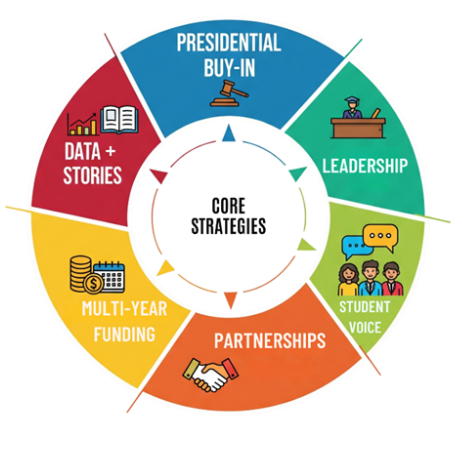
Statewide collegiate recovery networks provide structured support across campuses by centralizing resources, programming, and community. They raise awareness, combat stigma, and drive cultural change in higher education while leveraging data like the Missouri College Health Behavior Survey (MCHBS). Through peer-led initiatives, events, training, and services, these networks amplify student voices, build buy-in, and ensure lasting engagement. They also address institutional resistance, secure funding, and foster partnerships to make recovery support more accessible and sustainable.
Foundational Steps
1. Prioritize Voices and Leadership
2. Leverage Partnerships
3. Secure Sustainable Funding
4. Foster Visibility and Authenticity
Navigating Resistance and Funding
Navigating resistance and securing sustainable funding are essential for collegiate recovery networks. Resistance often arises from stigma, denial of substance use issues, or slow engagement, but can be reduced through strong leadership support, student initiatives, and effective use of data. Funding strategies vary, including legislative support, agency backing, provider contracts, or pilot programs. Key lessons include multi-year commitments, flexible models that sustain both new and existing programs, and accounting for indirect costs. Ultimately, leadership buy-in, student advocacy, and diverse funding approaches are critical for sustaining recovery networks.
Champions and Stakeholders
Champions and stakeholders are essential for sustaining collegiate recovery networks, emerging from different levels of commitment. Leadership support, mid-level staff, and students with lived experience can all serve as powerful advocates. Engaging diverse voices like students, faculty, prevention professionals, and community partners helps build credibility, reduce resistance, and mobilize both institutional and community support. Ultimately, success depends on identifying passionate individuals who can drive commitment and cultural change.
| Challenges | Recommendations |
|---|---|
| Staff turnover & student graduation disrupt program continuity. | Plan for succession & provide strong onboarding for staff & student leaders. |
| Stigma & privacy concerns limit student participation. | Increase visibility with syllabus statements, lapel pins, & safe non-stigmatizing spaces. |
| Disruptions like COVID-19 slow in-person programs. | Build flexible program models that can adapt to interruptions. |
| Institutional resistance or delayed responses to substance use issues. | Use leadership support, peer outreach, & data to demonstrate program need. |
| Difficulty hiring qualified staff; cultural mismatches with external providers. | Hire passionate staff with lived experience; be cautious with outsourcing. |
| Staff burnout & HR challenges. | Provide support systems & flexible staffing to reduce burnout. |
| Securing long-term funding & covering indirect costs. | Establish multi-year funding with institutional support & account for indirect costs. |
Measuring Success
Measuring the success of collegiate recovery networks requires both quantitative data and qualitative narratives. Surveys, focus groups, needs assessments, and event metrics provide structure, while tracking outreach, referrals, session attendance, certifications, support group growth, student engagement, and faculty training shows program reach. Indicators of cultural change, such as syllabus statements and ambassador programs, are also important. Ultimately, personal stories from students and staff are often the most powerful evidence of impact.